What are Daily Living Groups?
Daily Living Groups currently run Mondays and Fridays from 4.15 to 5.45pm within our full sized kitchen. We have an over 18 year old group which runs Fridays from 2.30 to 4pm.
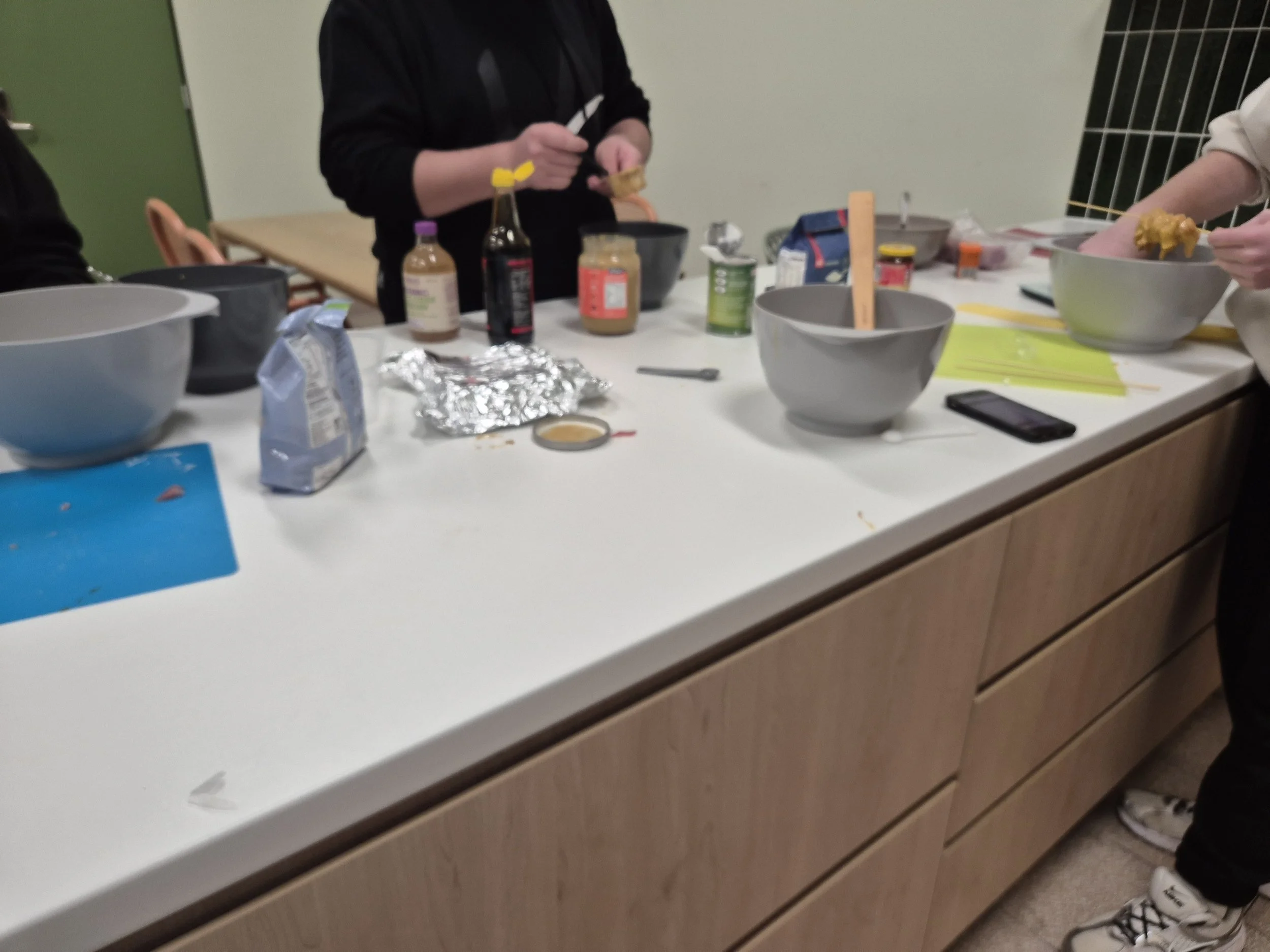
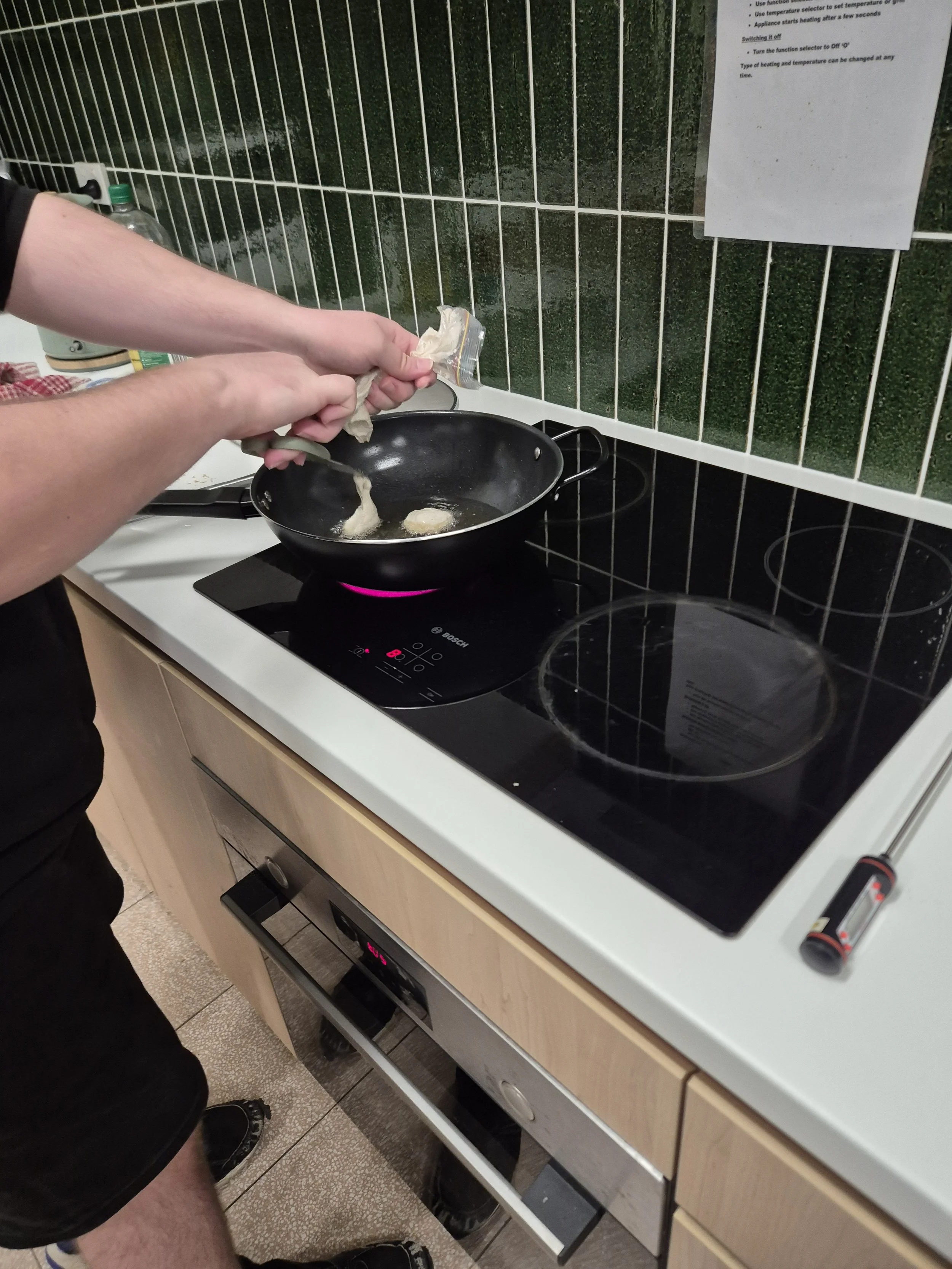
Daily Living Groups focuses on executive functioning skills through engagement in instrumental activities of daily living activities primarily cooking and research based tasks.
Tasks are specifically designed and graded for each participant to target areas of cognition and executive functioning such as planning, processing speed, informed choice and reasoning and sustaining effort and focus based skills. These areas have a multitude of underlying processes which are targeted by the carefully designed tasks.
As services are delivered within groups, peer based interactions add to cognitive loading and support the development of executive functioning such as by increasing cognitive loading by having to manage increasing amounts of cognitive data and thought processes related to tasks and social conversations, as well as allowing for growth within areas of social communication and social thinking such as developing theories of others and relationships.

Activities and Tasks
Activities and tasks are designed to meet individual needs in targeting areas of executive functioning which are challenging independent thought and decision making.
Groups use a variety of instrumental activities of daily living from:
Cooking and cleaning tasks
Creating recipes to meet a critera designed to stimulate thought
Budgeting tasks
The OT works closely with the client and their family to devise community activities or daily life modifications to build independence and adult capacities such as through:
Building expectations with chores and daily routine to reduce the need for support.
Developing supports to stimulate personal goal development.
Developing supports to guide behavioural modifications such as how we treat parents and siblings.
Money management
Targeting challenges with motivation and drive, in particular avoidant behaviours which cause family arguments and challenges.
What is executive functioning?
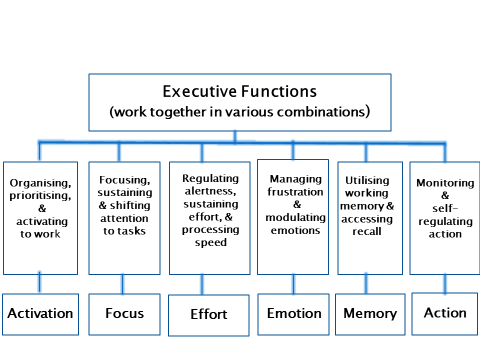
Executive functioning is thought to be the biggest challenge across the neurodiverse population as it encompasses the mental processes used to manage everyday life. One way to examine executive functioning is through the Brown’s executive functioning scale.
Activation phase is the thought processes used to screen, analyse the environment and situation to generate direction of thought to plan or coordinate action responses. It encompasses the planning stage which may be planning for the immediate or future need. It can be simple or more complex depending on the situation. For example:
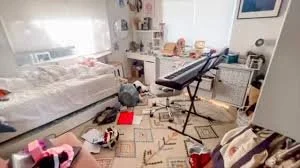
Cleaning your room. The image on the right may be your bedroom which activation may be simplified by direct and explicit prompts to act in single steps or graded up with a clean your room prompt or further graded up by a person having to manage their weekly routine to ensure a daily level or cleanliness and weekly larger clean. These goals or outcomes require varied amounts and intensities of underlying thoughts to manage the task to set levels of reasoning.
Focus is the ability to zoom in and out, to maintain focus and divide attention between the immediate actions and thoughts and needs of the situation such as maintaining focus on cleaning your room whilst music is playing or maintaining cooking procedures whilst talking to a family member.
Effort is a group of mental processes which enable you to sustain your mental and motor performance, allowing for quality performance without significant burden or fatigue.
Emotion is a group of mental processes which enables a person to recruit automatic and intentional regulation to manage the emotional intensity of the situation or daily life.
Knowledge is the information bank or center which encompasses the cognitive ideas, reasoning patterns and concepts of knowledge which are recruited to inform task activation.
Action is the group of mental processes used to self monitor your mental processes and actions, adjust thoughts and actions as completing or engaging in everyday life.
All stages or phases work collaboratively and in different combinations based upon the situation.